A missed ferry, a long immigration line, and one wrong station transfer can turn an easy regional trip into half a day of stress. That is why a good cross border transport guide matters so much when you are planning travel between Hong Kong, Macau, Shenzhen, Zhuhai, and Guangzhou. The route itself is often short. The friction comes from the details around it.
For most travelers, the real question is not how to cross the border. It is how to do it without wasting energy, losing time, or forcing the whole day around the transport plan. Families, cruise passengers, business travelers, and private groups usually care less about finding the cheapest possible route and more about arriving comfortably, on time, and ready to enjoy the destination.
What this cross border transport guide should help you decide
There is no single best option for every trip. The right choice depends on who is traveling, how much luggage you have, whether your day includes sightseeing, and how much flexibility you need.
If you are moving between major city centers and you are comfortable with stations, ticketing, and transfers, public transport can work well. If you are landing at the airport, traveling with children, meeting a cruise schedule, or trying to fit two or three stops into one day, private cross-border transport often makes more sense. It costs more, but it can save hours and remove several points of failure from the plan.
That trade-off matters. A lower ticket price can still become the more expensive choice if it leads to missed reservations, extra taxi rides, or a day that feels rushed from start to finish.
The main ways to travel across the border
The Greater Bay Area gives travelers several practical transport options. Each one suits a different kind of trip.
Private cross-border vehicle
This is usually the simplest choice for travelers who value door-to-door convenience. A private vehicle works especially well for airport pickups, hotel transfers, family travel, corporate trips, and custom sightseeing days that span more than one city.
The biggest advantage is control. You avoid carrying luggage through stations, dealing with multiple tickets, or figuring out local taxi arrangements after arrival. If your itinerary includes a hotel in one city, sightseeing in another, and a return later in the day, private transport can keep the schedule manageable.
The downside is price. It is a premium option, so it makes the most sense when comfort, timing, and flexibility matter more than the lowest fare. For small groups, the cost can still be very reasonable once split between travelers.
Ferry
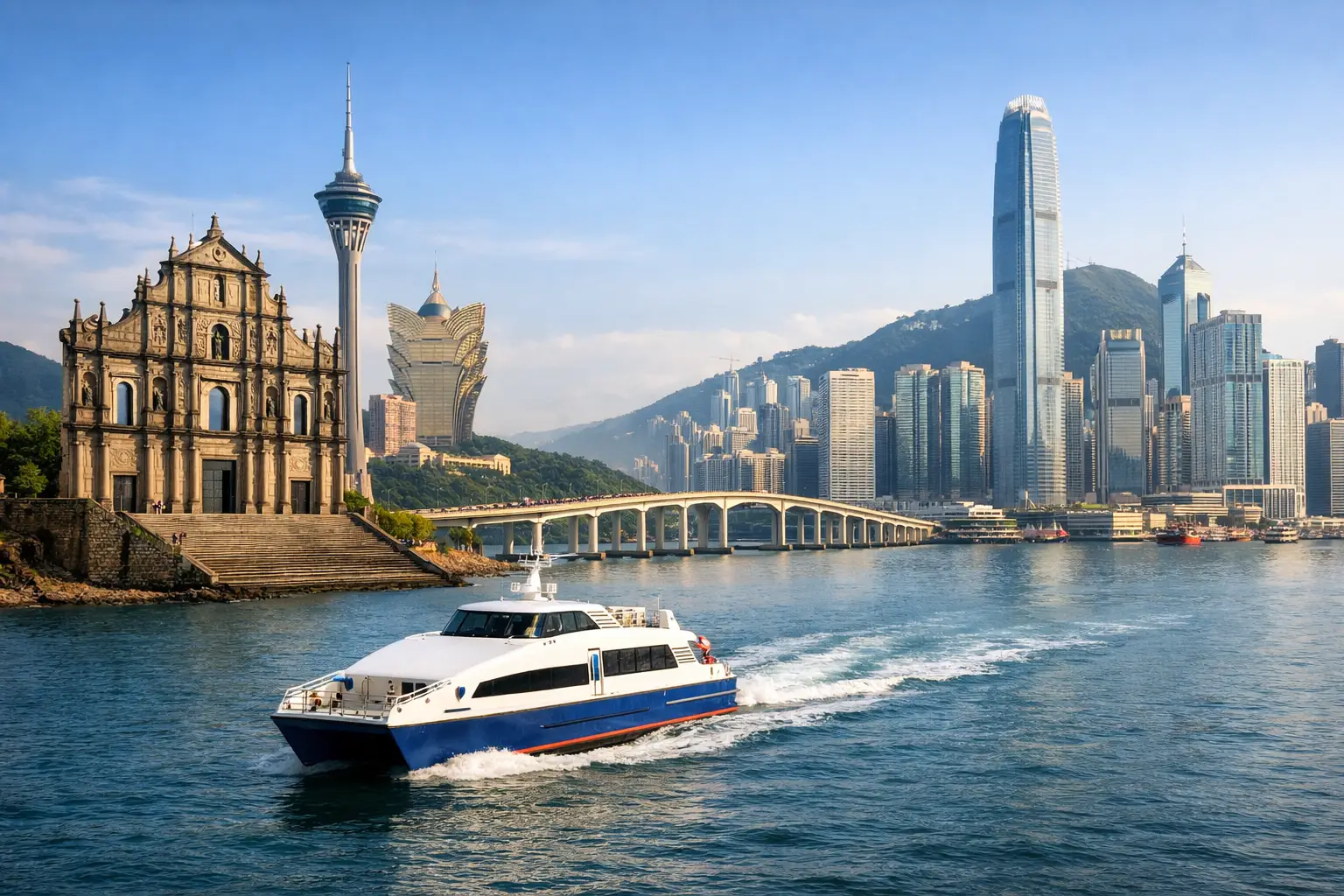
Ferries remain a useful choice on some routes, especially when the departure and arrival points line up with your trip. They can be efficient and straightforward, and many travelers like avoiding road traffic.
Still, ferries are less forgiving if your schedule changes. You need to arrive early enough for boarding and immigration procedures, and weather or timetable limitations can affect the day. If you are traveling with large suitcases or with older relatives who prefer the least walking possible, the process may feel more demanding than it first appears.
High-speed rail and train connections
Rail is often fast between major hubs, and it can be a very good option for travelers comfortable with station-based travel. If your hotel is near a rail station and your destination is also well connected, this can be an efficient middle ground between cost and speed.
Where rail becomes less simple is the part before and after the train. You still need to get to the station, allow enough buffer time, manage luggage, and arrange transport after arrival. On paper, the train ride may be short. In practice, the full door-to-door journey can be much longer.
Coach or bus
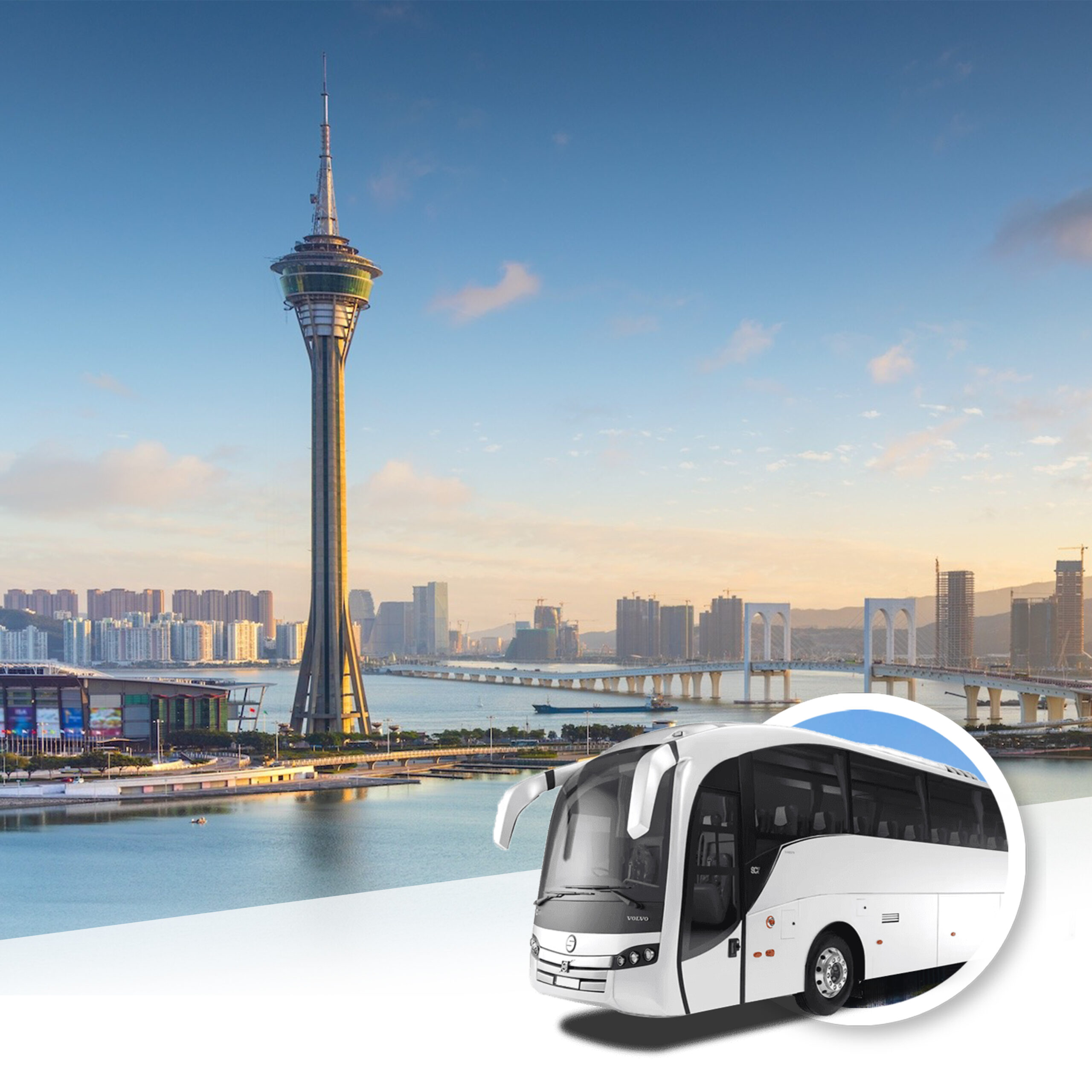
Coach services can be practical for budget-conscious travelers or larger groups on fixed schedules. They are often more direct than rail and less expensive than private vehicles.
The trade-off is flexibility and comfort. Departure times are fixed, stops may be limited, and the overall experience can feel less tailored. If your itinerary is simple, that may be fine. If your day depends on timing, it may not be ideal.
Documents and border planning
A strong cross border transport guide is never just about vehicles. Documents shape the trip just as much as the route does.
Travelers should confirm passport validity, visa requirements, and entry conditions for each destination before booking. Rules can differ depending on nationality, point of entry, and whether you are entering for tourism, transit, or business. A route that works perfectly for one traveler may not work for another in the same group.
This is where many self-planned trips go off track. People focus on travel time and overlook paperwork. If your group includes travelers from different countries, double-check everyone separately rather than assuming one rule applies to all.
It is also wise to build time around immigration. Border wait times can vary by day, season, and hour. Morning departures may help in some cases, while in others a later start avoids peak movement. There is no universal rule, which is why local route planning adds real value.
How to choose the right option for your trip
The best transport choice depends on the shape of the day.
If you are traveling from airport to hotel across the border, private transfer is usually the cleanest option. After a long flight, most travelers do not want to decode station signs, queue for separate tickets, or navigate luggage through multiple handoffs.
If you are taking a simple city-to-city trip with light bags and plenty of time, rail or ferry may work well. If you are traveling with children, older relatives, or a group with different comfort levels, reducing transfers often matters more than shaving a little off the fare.
For business travelers, reliability tends to outweigh everything else. Being late because of a missed connection is rarely worth the savings. For leisure travelers, the calculation is slightly different, but even then, time has value. Every hour spent managing transport is an hour not spent experiencing the place.
When sightseeing and transport should be planned together
This is where many visitors underestimate the region. Border crossings are not just about getting from one point to another. Often, they are part of a larger travel day.
A family might want to leave a Hong Kong hotel, visit Macau for key landmarks and lunch, then continue to another city the next day. A cruise passenger may need a transfer, a short city tour, and a timely return. A private group may want cultural stops, shopping time, and dinner reservations built into one workable schedule.
In those cases, transport and touring should not be planned separately. They affect each other. The crossing point you use, the time you depart, and the type of vehicle you choose all shape what is realistic once you arrive. This is one reason a service-led operator such as MyHKTour can be so helpful for premium travelers. The goal is not just moving people. It is making the whole day function well.
Common mistakes travelers make
The most common mistake is treating advertised travel time as total travel time. A route listed as quick may still involve a hotel transfer, early check-in, immigration queues, baggage handling, and onward transport after arrival.
Another mistake is underestimating luggage. A route that feels easy with a backpack can feel very different with shopping bags, strollers, or several family suitcases. Travelers also often overpack the itinerary, assuming border formalities will be smooth at every step.
Then there is the language and local systems factor. Many travelers are comfortable in one city and less comfortable in the next. That does not mean independent travel is impossible. It simply means the stress can accumulate faster than expected when tickets, pick-up points, and border procedures all need attention at once.
A practical way to think about value
When comparing options, look beyond ticket price and ask three questions. How many handoffs are involved? How much margin for delay do you have? How much of the day do you want to spend managing the trip yourself?
For some travelers, the answer will point clearly to rail or ferry. For others, especially families, private groups, and travelers on tighter schedules, private cross-border transport is often the better fit even at a higher cost. It buys back time, reduces friction, and keeps the day focused on the experience rather than the logistics.
The best cross-border trip usually feels easy once it starts. That rarely happens by accident. It comes from matching the route to the traveler, not forcing the traveler to adapt to a route that only looks good on paper.
If your itinerary spans more than one city, give transport the same attention you give hotels and sightseeing. A little planning at the start can turn a complicated border day into a comfortable one, and that changes the entire trip for the better.