A Macau day trip can feel effortless or oddly tiring, and the difference often comes down to one decision: private transfer vs ferry Macau. On paper, both get you there. In real travel conditions, they suit very different priorities, budgets, and schedules.
If you are deciding between the two, the best choice usually depends on how you value time, luggage handling, flexibility, and comfort. Some travelers want the lowest-cost route and do not mind terminals, queues, and fixed departures. Others would rather pay more for door-to-door planning and keep the day focused on the destination instead of the transit.
Private transfer vs ferry Macau: the real difference
The ferry is a public transport option built around set schedules and terminal-to-terminal travel. You make your own way to the departure point, check in, wait for boarding, complete the crossing, and then continue from the arrival terminal to your hotel, casino, meeting point, or sightseeing stop.
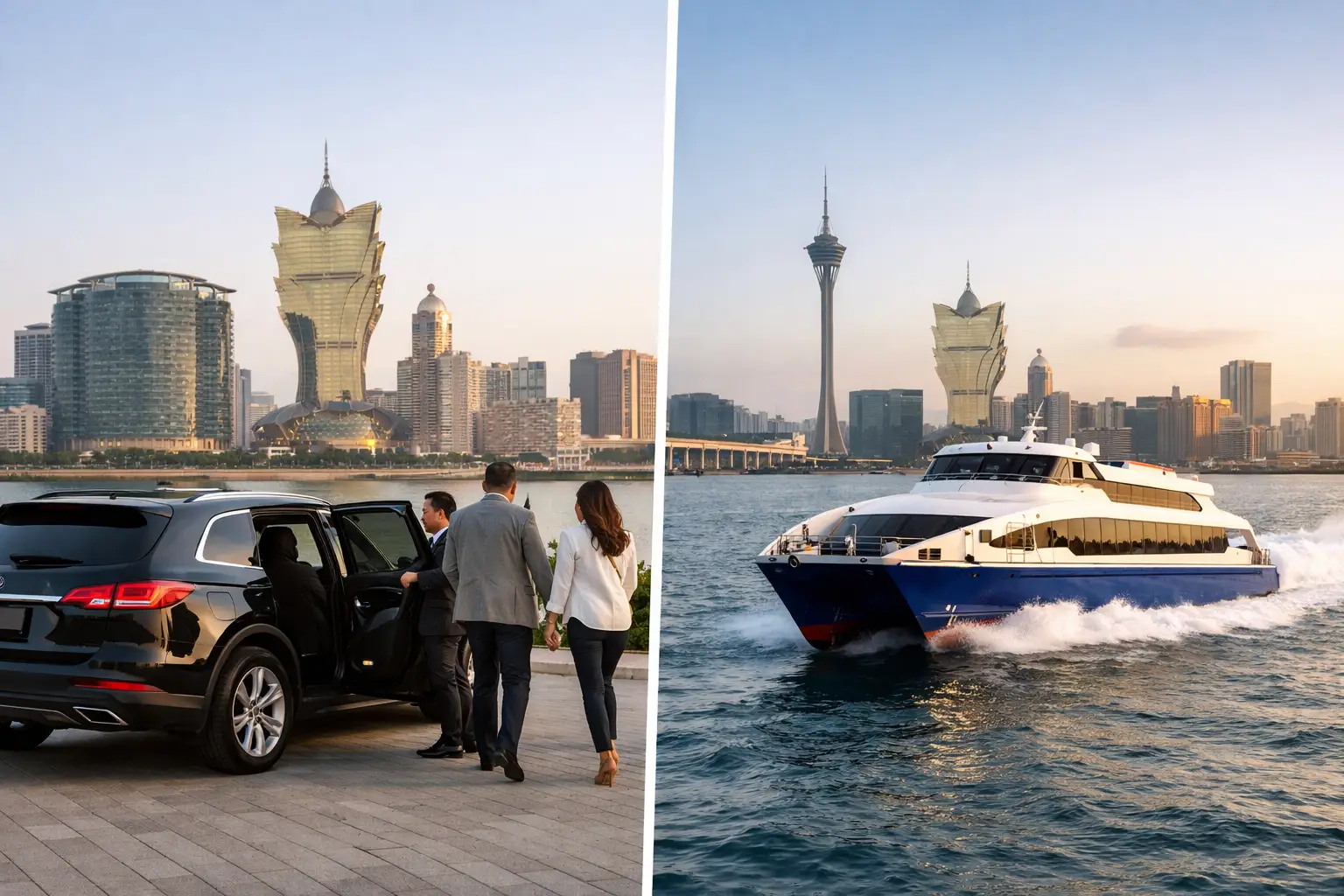
A private transfer is designed around your itinerary. Instead of organizing each leg separately, you book one arranged journey based on your pickup point, party size, luggage needs, and destination plans. That difference matters more than many first-time visitors expect.
For travelers staying in a Hong Kong hotel, flying in with suitcases, traveling with children, or trying to combine transport with sightseeing, private service often removes several small points of friction. Each one may seem minor on its own, but together they can take a lot of energy out of the day.
When the ferry makes sense
The ferry still works well for many visitors. If you are traveling light, staying near a ferry terminal, and comfortable following a fixed schedule, it can be a practical choice. Solo travelers and couples on a tighter budget often find it perfectly reasonable, especially if their trip is simple and they are not rushing to fit multiple stops into one day.
The appeal is straightforward. Ferries are familiar to many tourists, the route is well known, and the process is usually easy enough once you know where to go. If your hotel is conveniently located and you do not mind handling your own transfers on both ends, the savings may be worth it.
That said, the ferry is best when your plans are flexible. Weather, holiday demand, terminal crowds, and check-in timing can all shape the experience. Even when the sailing time looks short, the full door-to-door journey can take much longer than expected.
What travelers often underestimate about the ferry
The main issue is not the crossing itself. It is everything around it. You need to reach the terminal on time, manage ticketing or check-in, carry your bags through the terminal, wait to board, disembark with everyone else, and arrange the final leg after arrival.
For younger travelers with a backpack, that may not matter. For families with strollers, older parents, shopping bags, or a cruise schedule to catch, it can matter a lot. The ferry is simple in theory, but it asks you to coordinate more moving parts on your own.
Why many premium travelers choose a private transfer
A private transfer is less about speed alone and more about control. You know who is picking you up, where you are being dropped off, and how the trip fits into the rest of your plans. That can be valuable when the day includes hotel pickup, border crossing coordination, business meetings, or sightseeing after arrival.
Comfort is another major factor. After a long-haul flight or a packed Hong Kong itinerary, many travelers do not want one more queue, one more terminal, or one more handoff. A private vehicle gives you a calmer start and finish, especially if your group wants to stay together rather than split across taxis or navigate unfamiliar transit steps.
This is also where service quality matters. A well-organized provider can align pickup time, vehicle type, and route planning with your actual trip instead of forcing your trip to fit public transport timing. That is especially useful for families, corporate guests, and anyone booking a custom travel day rather than a simple point-to-point ride.
Time, comfort, and cost: where each option wins
If price is your main filter, the ferry usually wins. Public transport is generally cheaper than private service, and that remains true here. For independent travelers who do not mind the extra effort, the value can be good.
If comfort and convenience matter most, private transfer usually wins by a wide margin. You avoid multiple transfer points, reduce waiting time, and keep luggage handling to a minimum. The trip feels more direct even when the actual travel time is not dramatically shorter on paper.
Time is where the comparison gets nuanced. A ferry schedule may look efficient, but your total journey includes getting to and from terminals, early arrival, waiting, and onward transport. A private transfer may cost more, but it can save enough practical time to make the day feel much easier. For travelers with one day in Macau, that difference is often worth paying for.
The hidden value of fewer transitions
Travel fatigue rarely comes from one big problem. It usually comes from repeated small tasks: finding the right entrance, moving luggage again, checking departure times, waiting in line, then doing another local transfer on arrival.
Private transport reduces those transitions. That is why it tends to feel premium. You are not just paying for a vehicle. You are paying for fewer decisions, fewer interruptions, and a more predictable day.
Best option by traveler type
Families usually benefit more from private transfer, especially when traveling with young children or older relatives. The ability to move together, keep bags in one vehicle, and avoid crowded terminal routines can take a lot of stress out of the trip.
Small groups also tend to find private service more attractive than they first expect. Once the cost is shared, the price gap may feel more reasonable, particularly when compared with arranging multiple taxis around the ferry route.
Corporate travelers often prefer private transfer because timing and presentation matter. A direct, organized service supports a smoother schedule and gives less room for delays caused by navigation or terminal confusion.
Solo travelers and budget-focused couples are the group most likely to prefer the ferry. If the day is casual, luggage is minimal, and there is no strict appointment on arrival, the ferry remains a valid option.
Should you choose private transfer vs ferry Macau for a day trip?
For a day trip, private transfer often makes more sense than people assume. Day trips have less room for wasted time. If you only have a few hours to explore, every extra step in the transit process cuts into the part of the journey you actually care about.
That is why many travelers choosing private transfer vs ferry Macau end up leaning toward private service when the day includes more than one stop. If you want to visit heritage sites, major hotels, viewpoints, or dining spots without constantly recalculating transport, a private arrangement gives you more freedom to use the day well.
The ferry works better when the transport itself is just a simple means to an end and you are comfortable keeping the itinerary loose. It is not the wrong option. It is simply the option that asks more from you.
The better question is not which is cheaper
A lot of travelers start by comparing ticket price against vehicle price. That is understandable, but it is not the most useful way to decide. A better question is this: what kind of trip are you trying to have?
If you want the lowest-cost route and do not mind managing the details yourself, take the ferry. If you want your travel day to feel organized, comfortable, and tailored to your group, private transfer is often the better fit.
For the travelers MyHKTour typically serves – families, private groups, premium visitors, and guests trying to make the most of limited time – private transport tends to deliver better overall value, even at a higher upfront cost. Not because the ferry is bad, but because convenience becomes much more valuable once your trip includes real luggage, real schedules, and real expectations.
The easiest way to choose is to picture the day from hotel door to final return, not just the crossing itself. The right answer is the one that lets you spend less energy getting there and more energy enjoying Macau.