A Macau to Hong Kong transfer guide is less about finding one “best” route and more about matching the journey to your hotel, luggage, group size, and flight plans. A ferry may be the quickest choice from the Cotai Strip to central Hong Kong. The Hong Kong-Zhuhai-Macau Bridge can be more practical for travelers heading to Hong Kong International Airport or traveling with a private group. The right plan saves time at the border and leaves more of the day for the places you came to see.
Macau to Hong Kong Transfer Guide: Choose Your Route
Most visitors travel between Macau and Hong Kong by high-speed ferry or via the Hong Kong-Zhuhai-Macau Bridge, often called the HZMB. Helicopter transfers are available for travelers who prioritize speed and are comfortable with a premium price. A private transfer can also work well, but it is important to understand what “private” means on a cross-border route.
A licensed vehicle cannot automatically drive from any Macau hotel directly to any Hong Kong hotel. Cross-border permits, passenger immigration, pickup zones, and vehicle regulations all matter. Some private arrangements use one vehicle across the border when permits allow; others provide coordinated vehicles on each side, with assistance through the port. For families, older travelers, and groups carrying several bags, that coordination can be worth far more than trying to piece together separate tickets, shuttles, and taxis.
High-speed ferry: best for central locations
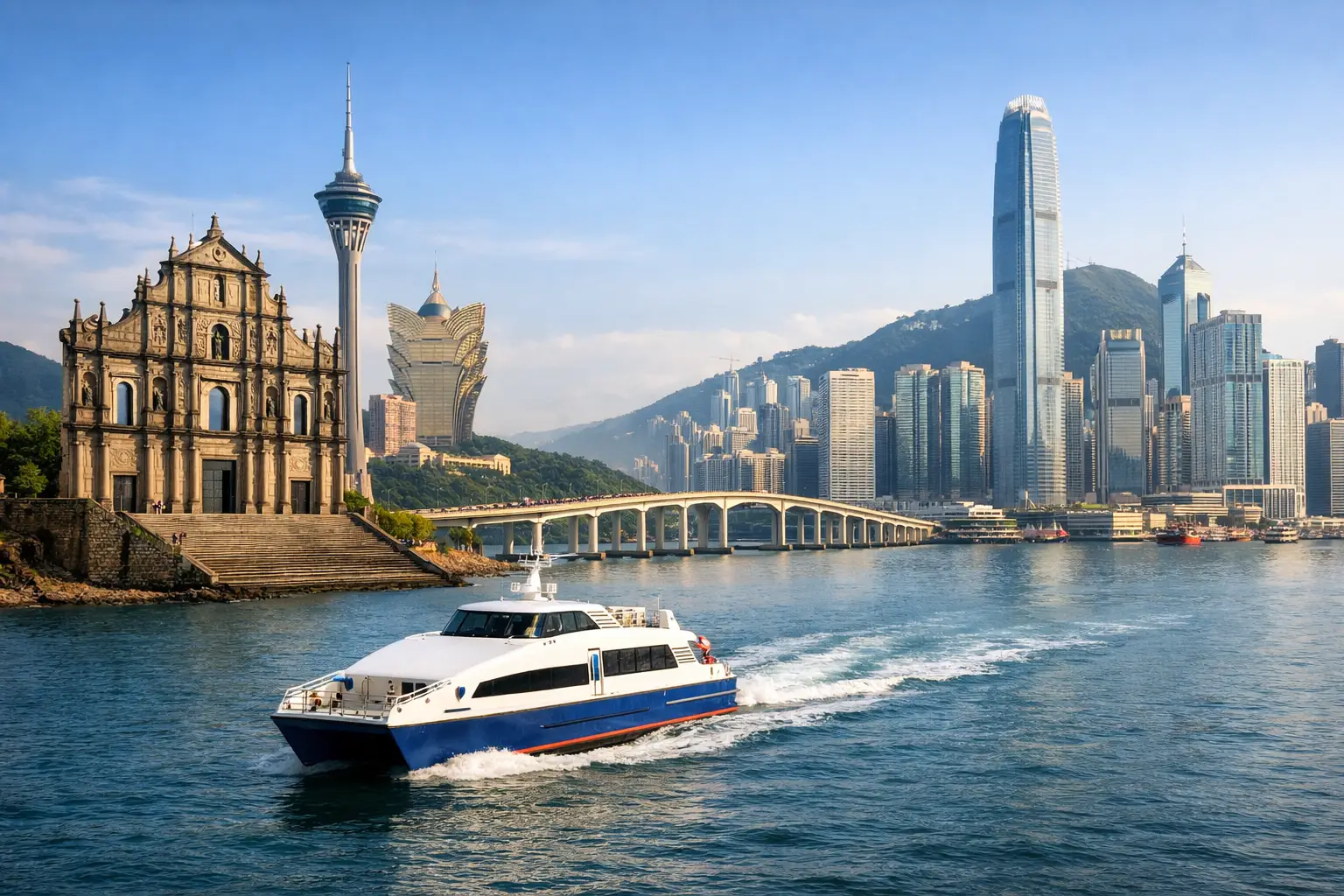
The ferry is often the most straightforward option for travelers staying on Macau Peninsula or Cotai and continuing to Hong Kong Island, Kowloon, or nearby hotels. Services generally depart from Macau Outer Harbour Ferry Terminal or Taipa Ferry Terminal and arrive at terminals such as Hong Kong-Macau Ferry Terminal in Sheung Wan or China Ferry Terminal in Tsim Sha Tsui.
The sailing itself is typically around an hour, although travelers should allow additional time for check-in, baggage procedures, immigration, and getting from the terminal to the hotel. In real terms, a hotel-to-hotel journey can easily take two to three hours.
Choose the ferry when your final destination is central Hong Kong and you are comfortable moving your own luggage after arrival. It is also a good value for couples and independent travelers. The trade-off is that ferry schedules can be affected by weather and sea conditions, and the ride may not suit travelers prone to motion sickness.
HZMB shuttle bus: best for the airport and large groups
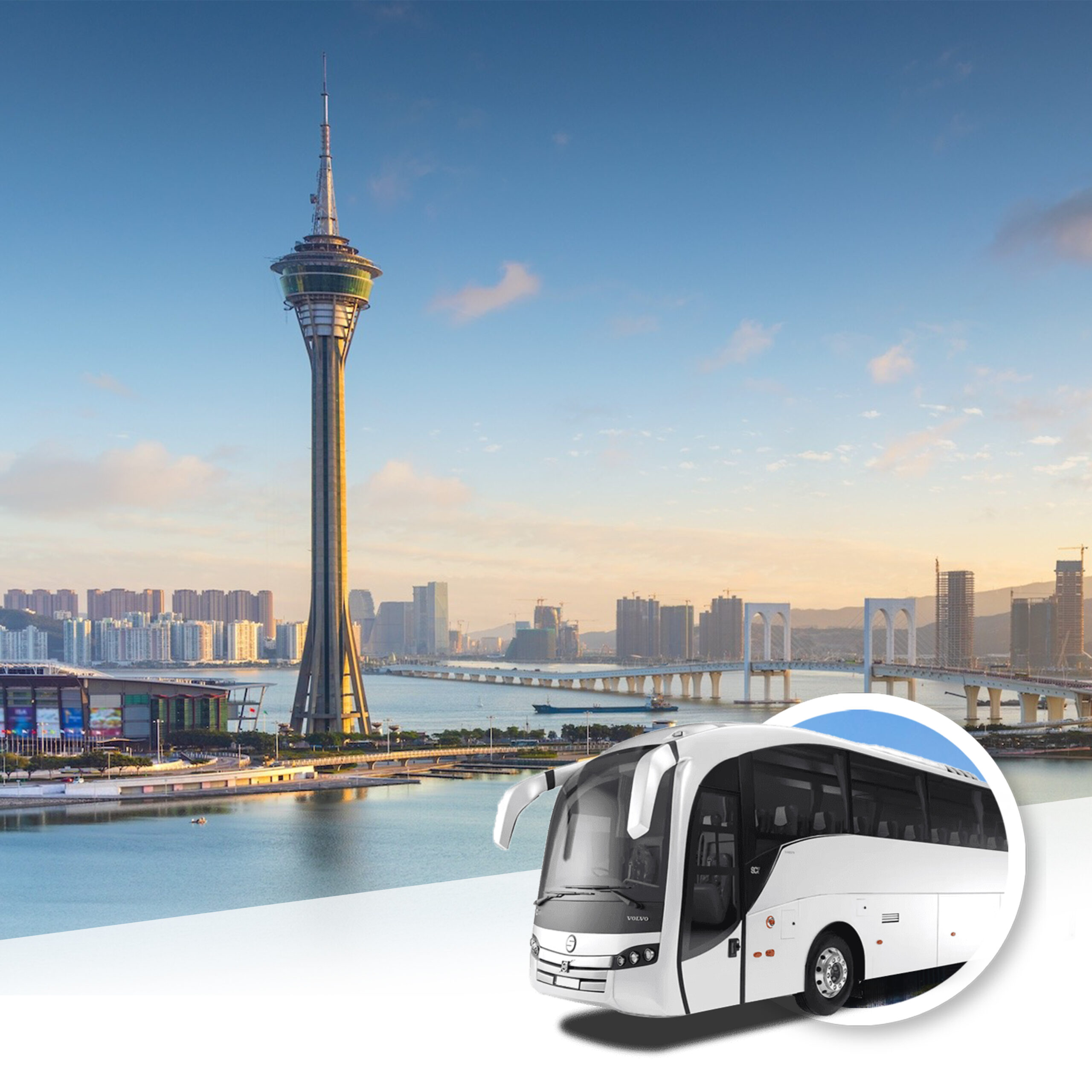
The Hong Kong-Zhuhai-Macau Bridge connects Macau, Zhuhai, and Hong Kong across the Pearl River Estuary. Public cross-border shuttle buses, commonly known as the Gold Bus, run between the Macau Port and the Hong Kong Port. The road journey on the bridge is relatively short, but total timing depends on how quickly you complete immigration at both ends.
This route is especially useful if you are connecting to Hong Kong International Airport. From the Hong Kong Port, onward airport transport is far more convenient than crossing into downtown first. It can also be a sensible choice for travelers arriving in Macau late at night, when ferry schedules may be more limited.
The main compromise is the number of steps. You need transportation from your Macau hotel to the Macau Port, border clearance, the shuttle bus, Hong Kong immigration, and another ride to your final destination. For travelers with light luggage, this can be manageable. For a multi-generation family, a cruise group, or a party with strollers and large suitcases, a coordinated private arrangement can make the route much less tiring.
Private transfer: best for comfort and tailored timing
A private Macau-to-Hong Kong transfer is designed around your schedule rather than a fixed sailing or shuttle departure. Depending on the routing and permits available, it may include hotel pickup, help with luggage, clear instructions at immigration, and a vehicle waiting after border formalities. It can also be paired with a sightseeing stop, airport drop-off, or a multi-city itinerary that includes Zhuhai or Shenzhen.
This option is particularly valuable when time is limited. For example, a family checking out of a Cotai hotel, catching an evening Hong Kong flight, and traveling with several bags does not need to spend the day comparing terminals and shuttle connections. Corporate travelers may also prefer the privacy, schedule control, and ability to work between stops.
Pricing is usually higher than public transportation, but it is priced per vehicle or group rather than per individual in many cases. Once you divide the cost among four to six passengers, compare it with ferry tickets, taxis at both ends, baggage handling, and the time required to organize each step. MyHKTour can arrange private transport around the transfer itself, including sightseeing and customized onward travel where appropriate.
Helicopter: best when every minute matters
A helicopter transfer between Macau and Hong Kong takes only about 15 minutes in the air. It is the fastest and most memorable option, particularly for business travelers, special occasions, or travelers with a very tight schedule.
However, the full journey still includes check-in, security, immigration, and travel to and from the heliports. Weather and operating conditions can affect schedules, while baggage allowances are typically more restrictive than ferry or road options. Consider it a premium time-saving service rather than a practical choice for most families or large groups.
Plan the Border Process Before You Leave Macau
Hong Kong and Macau operate separate immigration systems. Even if your nationality allows visa-free entry to both places, you must carry a valid passport and complete departure and arrival formalities when crossing between them. Do not treat the trip as a domestic hotel transfer.
Check that your passport has sufficient validity for the remainder of your trip and confirm entry requirements for your nationality well before travel. If you hold a visa, permit, or document that applies to only one jurisdiction, verify how it affects re-entry. Travelers continuing to mainland China also need to consider China’s separate entry rules.
Keep passports, transport confirmations, hotel addresses, and any onward flight details in an easy-to-reach bag. Immigration lines can move quickly, but they can also lengthen around weekends, public holidays, major conventions, and school vacation periods. A small amount of preparation prevents a rushed search through checked luggage at the counter.
Timing That Works in Real Life
Do not calculate your transfer based only on the published ferry sailing time or bridge driving time. A practical plan includes hotel checkout, the ride to the departure terminal or port, check-in, immigration, baggage collection, arrival procedures, and the final ride into Hong Kong.
For a ferry, aim to reach the terminal well ahead of departure, especially if checking bags or traveling during peak periods. For the bridge, build in time for two immigration points and possible queues at the transfer halls. If you are connecting to an international flight, plan a generous buffer rather than assuming a normal weekday crossing will represent your travel day.
Early morning and late afternoon departures can be busy because of business travel and day-trip traffic. Weekend afternoons and public holidays are often more crowded. If flexibility is available, a mid-morning or early-afternoon crossing can feel more relaxed than leaving immediately after a hotel breakfast rush or during the evening return flow.
Match the Transfer to Your Travel Style
A couple staying near Central or Tsim Sha Tsui may find the ferry efficient and easy. A family with young children might prefer a private, assisted route via the bridge, particularly if they are heading to the airport or a Disneyland-area hotel. A group of eight or more should compare the total cost and logistics of individual ferry tickets against a charter solution, because keeping everyone together can be the real advantage.
Cruise passengers should also consider terminal timing carefully. A delayed disembarkation can make a fixed ferry booking stressful, while travelers landing at Hong Kong International Airport may benefit from a bridge-based plan rather than entering the city only to leave it again. Muslim travelers, travelers with mobility needs, and guests with dietary or sightseeing requests can benefit from combining the transfer with a tailored itinerary instead of treating transport as a separate task.
The best route is the one that fits the rest of your day. Leave Macau with enough time to enjoy the last view of Cotai or the historic center, and arrive in Hong Kong with a clear plan for your luggage, hotel check-in, and next experience.