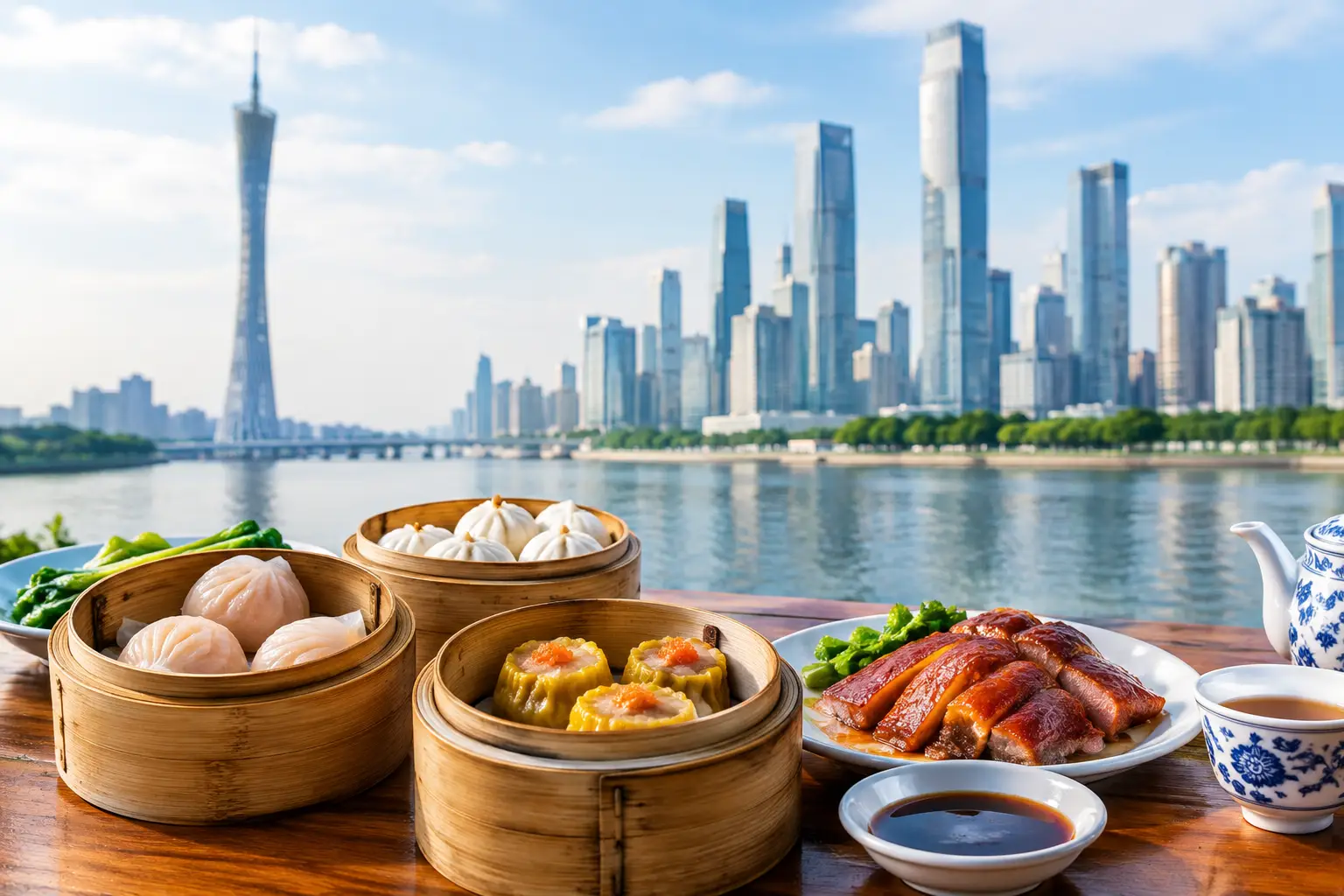
A Guangzhou food day can begin with a tea-house cart rolling past your table and end with a bowl of noodles after the city’s lights come on. That range is what makes Guangzhou culinary highlights so rewarding for travelers who want more than a quick meal between attractions. Cantonese cooking is often described as delicate, but the real experience is wonderfully broad: precise dim sum, seafood chosen from tanks, slow-simmered soups, roast meats, and humble street snacks that locals return to again and again.
For visitors arriving from Hong Kong or combining several cities in one trip, Guangzhou is best enjoyed with a clear plan and enough time to sit down. The city rewards unhurried eating. A well-paced private day lets you experience its food culture without turning every meal into a rushed search for an address, a menu translation, or the next train.
Guangzhou culinary highlights start with yum cha
In Guangzhou, dim sum is not simply brunch. Yum cha, literally drinking tea, is a social ritual built around conversation, shared plates, and a long pot of tea. Traditional tea houses can be busy in the morning, particularly on weekends, when multigenerational families gather around round tables.
Start with the familiar classics: har gow, translucent shrimp dumplings; siu mai, open-topped pork and shrimp dumplings; and char siu bao, soft steamed buns filled with barbecue pork. Then add dishes that show the kitchen’s range, such as rice noodle rolls with shrimp or beef, sticky rice wrapped in lotus leaf, and crisp fried taro dumplings.
The important detail is freshness. Excellent dim sum should feel light despite the variety. The wrapper of a shrimp dumpling should be tender but not soggy, while steamed ribs should carry black bean fragrance without overwhelming the meat. Ordering too much is an easy mistake, especially for couples or small families. Choose six to eight items for a group of four, then add more after the first round arrives.
Tea is part of the meal
Tea brings balance to a dim sum table. Jasmine, pu-erh, and chrysanthemum are common choices, and preferences vary by restaurant. If you are unsure, ask for a recommendation based on what you are ordering. A rich selection of fried items may call for a fuller-bodied tea, while a lighter seafood-focused meal works well with floral tea.
Some traditional venues use a numbered ordering sheet, while newer restaurants may offer picture menus or digital ordering. English availability varies, so a local guide can make the process more relaxed and help explain which specialties are worth trying that day.
Find the Cantonese flavor beyond dim sum
Dim sum gets the attention, but Guangzhou’s table cooking tells a larger story. Cantonese chefs favor ingredients at their seasonal peak and use steaming, quick stir-frying, poaching, and gentle braising to preserve natural flavor. The result can look understated compared with heavily spiced regional Chinese cuisines, yet the technique is exacting.
Seafood is central. At many restaurants, diners select fish, crab, clams, or prawns before they are cooked. Steamed fish with ginger and scallion is a benchmark dish: the flesh should be sweet and moist, the soy-based seasoning fragrant, and the aromatics fresh. For travelers who prefer a lower-key setting, a restaurant that specializes in a few seafood dishes can be more comfortable than a vast banquet hall.
Roast goose is another essential Guangzhou experience. The skin should crackle, the meat should remain juicy, and the sweet-savory glaze should never taste heavy. It is often ordered alongside roast pork with blistered skin or soy-marinated chicken. These dishes travel well as part of a market-style lunch, but they are best eaten soon after serving.
Slow soups deserve a place on the itinerary too. Cantonese soups may simmer for hours with pork, chicken, dried seafood, roots, melon, or herbs. They are restorative rather than flashy, and a good bowl offers a glimpse of home-style food culture that visitors can miss when they chase only famous dishes.
Save room for snacks, sweets, and noodles
A food-focused day needs breathing room between larger meals. Guangzhou’s smaller bites make that easy. In historic neighborhoods and local shopping streets, look for flaky egg tarts, crisp sesame balls, steamed sponge cakes, and sweet soups made with red bean, black sesame, or ginger milk.
Rice noodle dishes are a practical late-afternoon or evening choice. Wonton noodles, with springy thin noodles and shrimp-filled wontons in clear broth, are a Cantonese staple. Cheung fun, silky rolled rice noodles, can be a breakfast dish, a snack, or a quick lunch depending on the filling and setting. Congee, meanwhile, is ideal when a traveler wants something gentle after a day of richer flavors.
There is a trade-off between famous food streets and neighborhood shops. High-profile areas are convenient, photogenic, and useful for a first visit, but crowds can slow service and quality can be inconsistent. A small, well-established local shop may offer a better bowl of noodles, though its menu may be entirely in Chinese and seating may be tight. The right choice depends on whether your group values atmosphere, speed, comfort, or culinary specificity.
Plan your Guangzhou food day around timing
The strongest itinerary usually has two main meals rather than constant eating. Begin with a late-morning dim sum session, allow time for a cultural stop or a walk through a traditional district, then plan an early dinner centered on roast meats, seafood, or Cantonese home-style dishes. Add snacks only when they genuinely fit the route.
Weekend tea houses fill early, and popular dinner restaurants can have lengthy waits. Reservations are valuable for private groups, travelers with children, and anyone with a train schedule to meet. Dietary needs also need advance thought. Pork, shellfish, dried shrimp, and oyster sauce appear frequently in Cantonese cooking, sometimes in dishes that seem vegetarian at first glance.
Muslim travelers should plan carefully because halal Cantonese options are more limited than standard local restaurants. It is possible to organize suitable meals, but confirming ingredients, kitchen practices, and dining location in advance avoids disappointment. Vegetarian, vegan, and allergy-conscious guests benefit from the same preparation, particularly when language differences make last-minute questions harder.
Make transport part of the experience
Guangzhou is a large city, and its best food stops are not always beside one another. Public transit can work well for independent travelers with time and confidence, but it becomes less appealing when carrying shopping bags, traveling with older relatives, managing a stroller, or arriving from another city with luggage.
A private vehicle creates useful flexibility: an early restaurant reservation, a market visit, a relaxed lunch, and a dinner stop can all fit into one route without repeated transfers. For guests traveling from Hong Kong, the border process and arrival timing should shape the dining plan. It is wiser to book the first meal with a time buffer than to rush across the border for a reservation that may be lost.
MyHKTour can arrange a customized private itinerary that combines cross-border transportation, local sightseeing, and food stops selected around your group’s tastes and pace. This is particularly helpful for families, corporate groups, and travelers who want a dining day built around comfort rather than transit calculations.
What to order if it is your first visit
If you have only one day, focus on dishes that reveal different sides of Cantonese cooking. Order steamed shrimp dumplings and rice noodle rolls at dim sum; try roast goose or crisp roast pork for lunch or dinner; add a simply steamed fish if your group enjoys seafood; and finish with wonton noodles, egg tarts, or a warm sweet soup.
Avoid treating the city as a checklist. The most memorable meals are often not the most elaborate ones. They might be a patiently poured cup of tea, a perfectly made dumpling, or a table where everyone tries one more shared dish before heading back to the hotel. Give Guangzhou enough time to feed your curiosity as well as your appetite.