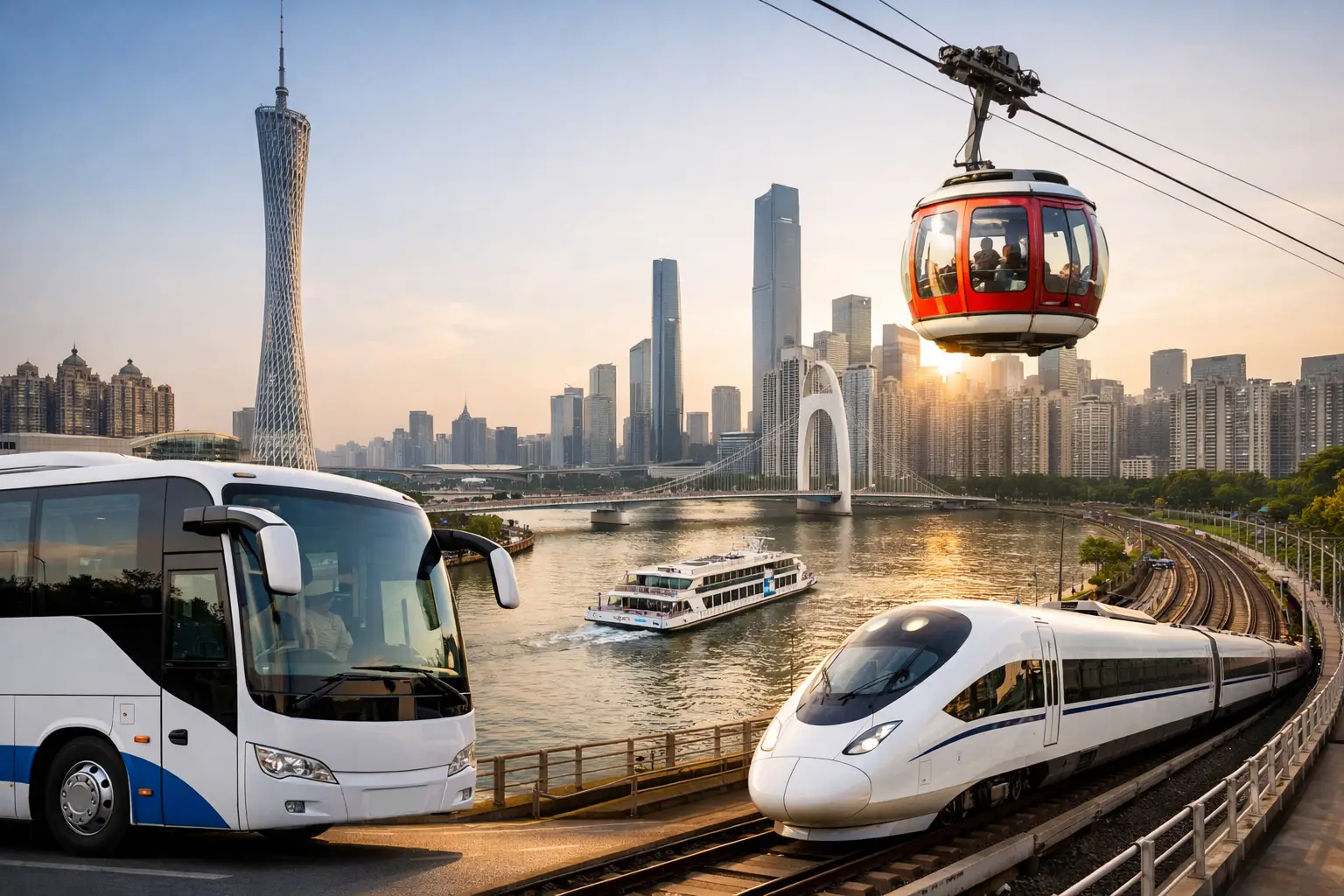
Landing in Guangzhou with a short list of must-see places sounds simple until you map them out. Canton Tower, Shamian Island, Chen Clan Ancestral Hall, Beijing Road, Yuexiu Park, and Baiyun Mountain are not difficult to reach, but they do demand a transport plan. This Guangzhou sightseeing transport guide is built for travelers who want to spend less time decoding routes and more time actually enjoying the city.
Guangzhou is large, busy, and easier to move through than many first-time visitors expect. The challenge is not whether transport exists. It is choosing the right option for your pace, group size, luggage, and tolerance for transfers. If you are visiting for one full day, arriving from Hong Kong, or traveling with children or older family members, the best transport choice may look very different from what works for a solo traveler with flexible timing.
How to use this Guangzhou sightseeing transport guide
Start with your itinerary shape, not the cheapest fare. That is usually where visitors make the wrong call. A metro ride may cost very little, but if your day includes multiple attractions spread across the city, station exits, walking time, and line changes can quietly take a big bite out of your schedule.
On the other hand, booking private transport for a compact route in a traffic-heavy part of town may not save much time at all. Guangzhou rewards a mixed approach. Many travelers do best with one primary mode for the day, then use taxis or ride-hailing to bridge the awkward gaps.
If your visit is built around only two or three major stops, public transit can be perfectly workable. If you want a fuller sightseeing day with door-to-door convenience, private transport becomes much more attractive.
Metro: best for independent travelers with simple routes
Guangzhou Metro is clean, extensive, and dependable for major sightseeing areas. For many visitors, it is the best low-cost option for moving between well-known districts. Stations are generally modern and signage is manageable for international travelers, especially on the busier lines.
The metro works especially well for places such as Canton Tower, Chen Clan Ancestral Hall, and Beijing Road. If you are comfortable walking a bit and changing lines, you can cover a lot of ground without much trouble. It is also a sensible choice during peak road congestion, when a car may move more slowly than expected.
The trade-off is comfort and flexibility. Some exits involve longer underground walks than travelers expect, and crowded periods can feel tiring if you are with young kids, seniors, or shopping bags. Metro is also less ideal when your day includes scenic spots with less direct station access, such as parts of Baiyun Mountain, or when you are trying to connect a hotel, train station, restaurant stop, and several attractions in one loop.
For travelers who enjoy self-guided city days, the metro is practical. For those who want a smoother sightseeing rhythm, it can start to feel like work.
Taxi and ride-hailing: good for short hops and flexible days
Taxis and ride-hailing apps are useful in Guangzhou, particularly for point-to-point sightseeing when the metro route is indirect. This is often the sweet spot for travelers who want more comfort but do not need a vehicle waiting all day.
A short ride from Shamian Island to Beijing Road, or from a museum area to your dinner reservation, can save time and energy. This option is also helpful when weather changes your plan. Guangzhou heat and sudden rain can make even a short transfer feel much longer.
Still, there are a few limits. During rush hour or around popular shopping districts, road traffic can be slow. Communication can also be hit or miss if you are relying on ad hoc taxi trips throughout the day. If every leg of your sightseeing depends on booking the next car one by one, the day can become fragmented.
For couples or small groups, taxis are often cost-effective for selected segments. For travelers trying to keep the day tightly organized, they are better as a support option than a full sightseeing strategy.
Private car service: best for comfort, families, and packed itineraries
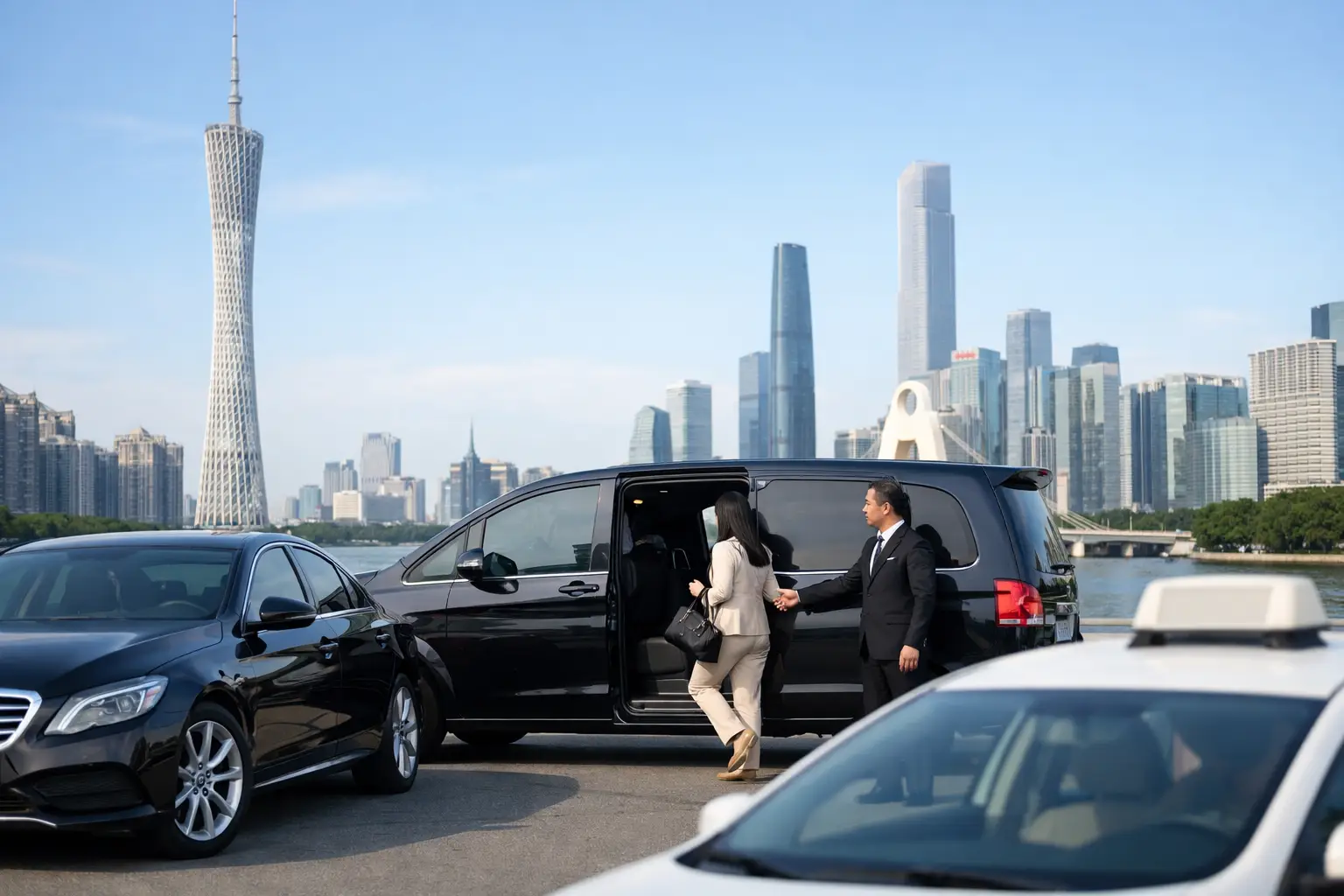
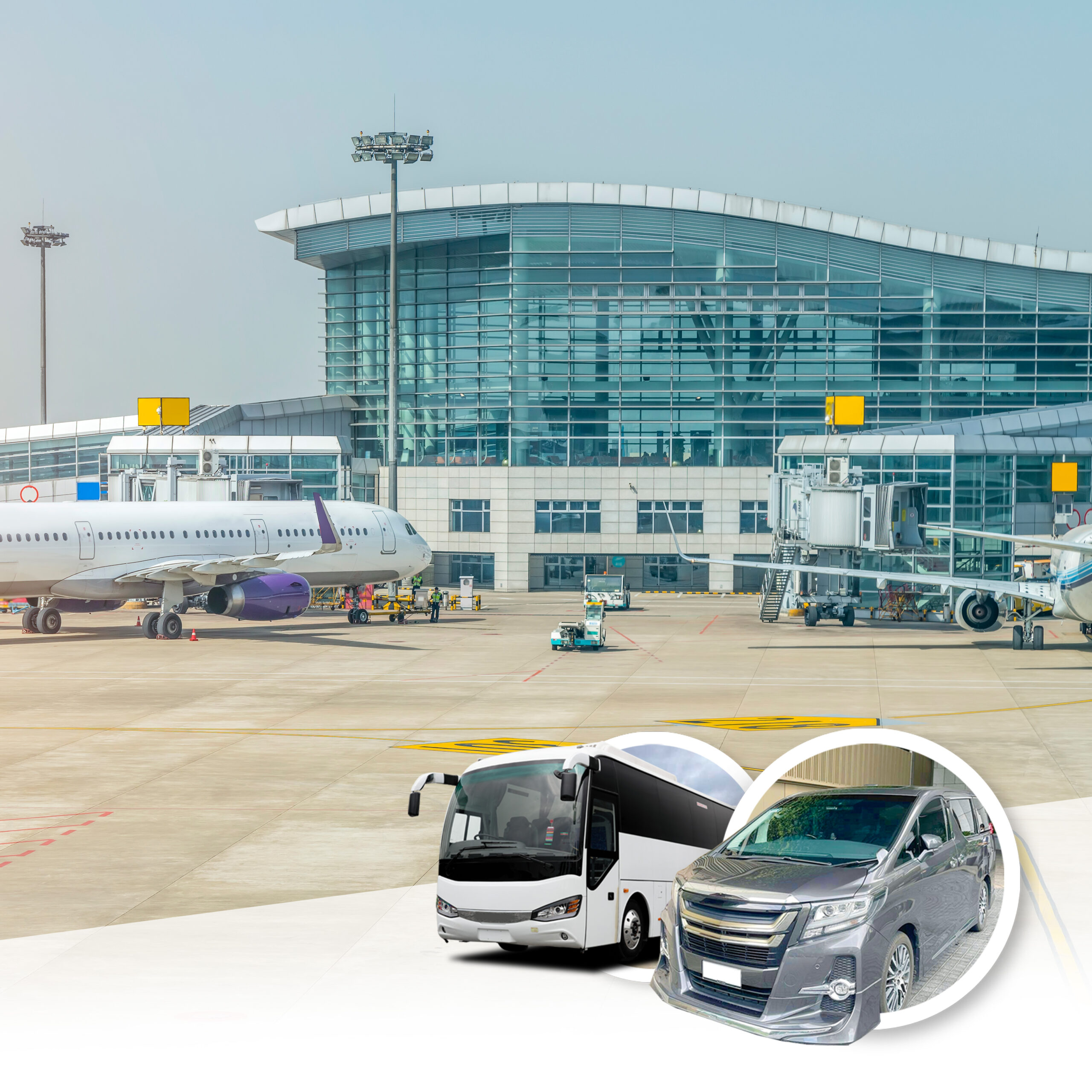
Private transport is usually the strongest choice when time matters as much as cost. If you are visiting Guangzhou on a day trip, arriving from another city, traveling with family, or simply want a more relaxed experience, a dedicated vehicle makes the city much easier to manage.
The main advantage is not only comfort. It is sequence. You can move from hotel pickup to your first attraction, stop for lunch, continue to a historic district, then finish at a train station or evening drop-off without repeatedly figuring out the next step. That matters more in Guangzhou than many travelers realize because the city is broad, and even efficient routes can lose momentum once you add transfers.
This option is especially appealing for multi-generational families, corporate guests, cruise passengers on a tight clock, and travelers combining sightseeing with intercity transport. A private vehicle also helps if your plans include custom timing, photo stops, shopping pickups, or attractions that are easier to visit in a specific order.
The trade-off is price. It costs more than public transit, and if your day is very light, it may be more service than you need. But for premium travelers who value easy logistics, it often becomes the difference between seeing Guangzhou comfortably and spending the day managing movement.
Bus tours and group transport: useful in specific cases
Shared sightseeing buses can work for budget-minded travelers who prefer a structured route. They remove some planning pressure and may cover headline attractions without much effort from you. For first-time visitors with no need to customize, that simplicity can be appealing.
But bus sightseeing has limits in a city where interests vary widely. You may spend too long at one stop and not enough at another. Boarding times, fixed schedules, and group pacing can also reduce flexibility. If your priority is efficiency rather than the lowest possible cost, private arrangements usually offer a better fit.
For larger family groups, school groups, or corporate travelers, dedicated group transport is different from a shared bus tour. In that case, the value comes from keeping everyone together, controlling timing, and avoiding the headache of splitting across multiple taxis.
Best transport choices by sightseeing style
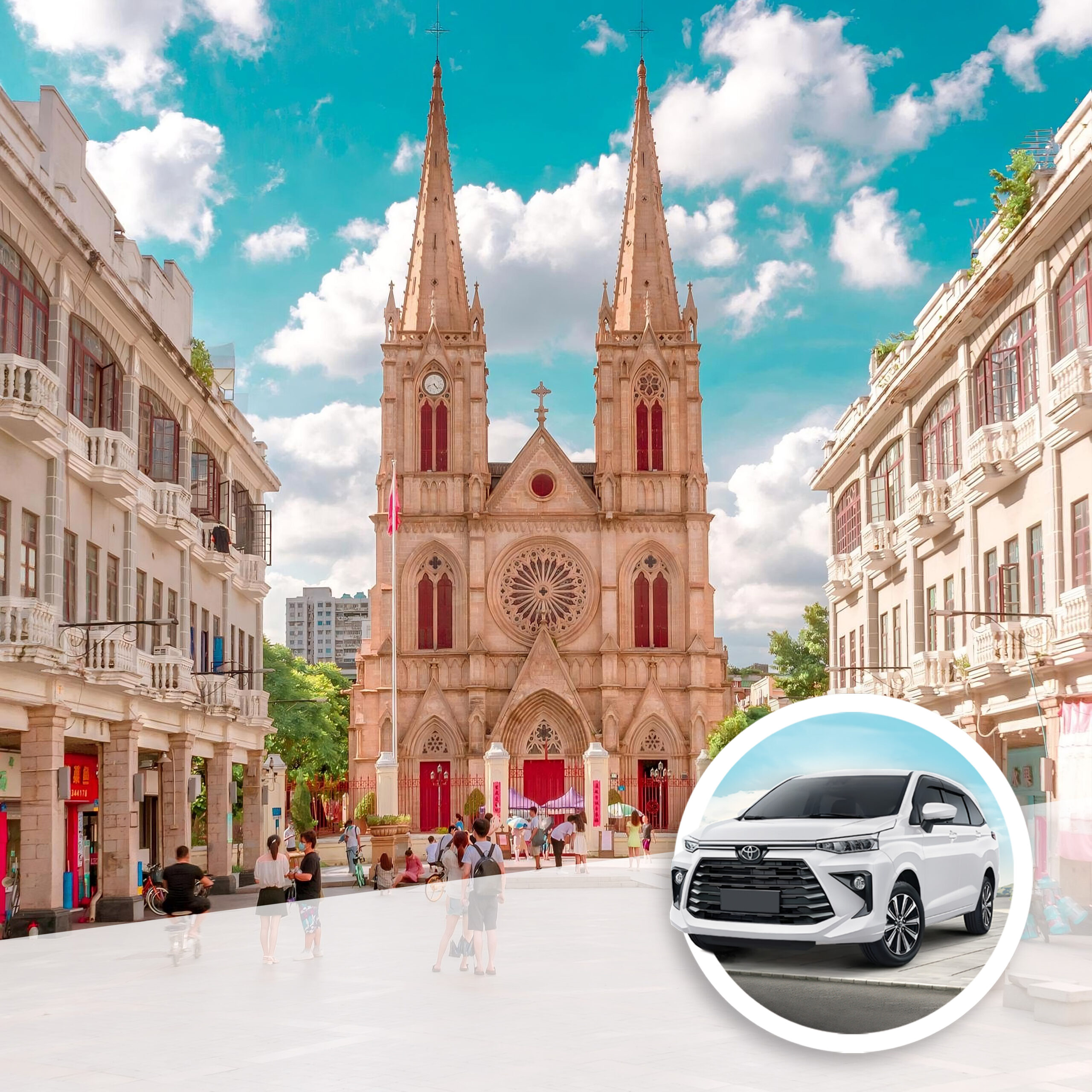
If your plan is mostly historic and cultural, with stops like Chen Clan Ancestral Hall, Shamian Island, and Beijing Road, a metro-and-taxi combination can work well. These places are central enough that independent travelers can connect them without too much strain.
If your route includes skyline views, shopping, and riverfront stops, especially around Canton Tower and the newer districts, road transport becomes more appealing because you can move directly between attractions, meals, and evening viewpoints.
If Baiyun Mountain is on your list, think carefully about energy levels. The attraction itself already involves movement, so many travelers prefer not to add multiple public transit transfers on the same day. A direct car ride can make the outing feel far more manageable.
For travelers arriving in Guangzhou from Hong Kong or another nearby city, private transport is often the smartest option because the sightseeing day starts with a logistics layer before the attractions even begin. Keeping the transport side organized leaves more room for the experience itself.
Common mistakes visitors make
The biggest mistake is underestimating distance. Guangzhou attractions can look close on a map but still require longer transfers than expected once traffic, station walking, and entry queues are factored in.
The second is planning too many stops. A realistic private sightseeing day often feels richer with three or four well-chosen places than with six rushed ones. This is even more true if meals, shopping, or family needs are part of the schedule.
The third is treating transport as separate from the itinerary. In practice, the way you move shapes what kind of day you will have. A transport plan should support the pace you want, not force you into one.
Choosing the right setup for your trip
If you are comfortable navigating on your own and your route is straightforward, use the metro for the backbone of the day and add taxis where convenient. If you want speed, comfort, and a more personalized flow, a private car is usually worth it. And if your trip includes family members, luggage, or a cross-city connection, convenience tends to win over savings.
This is where a service-led operator can add real value. A company like MyHKTour is not just arranging a ride. It can help match vehicle size, route logic, timing, and sightseeing priorities so the day feels coordinated rather than pieced together.
The best Guangzhou day is rarely the one with the most stops. It is the one where getting from place to place feels easy enough that you can actually notice the city around you.