Some Hong Kong days look effortless on camera and feel chaotic in real life. The difference is rarely the city itself. It is the route. If you want hong kong aesthetic & instagrammable travel routes that actually work, the best plan is not chasing random photo spots across the map. It is building a day around neighborhoods, light, traffic patterns, and how much energy you want to spend getting from one stop to the next.
Hong Kong rewards travelers who think in sequences. A clean visual day might start with pastel shopfronts and coffee in Sheung Wan, shift into street texture in Central, move toward harbor lines in Tsim Sha Tsui, and finish with skyline light after sunset. The photos feel varied, but the experience stays smooth. That balance matters if you are traveling with family, a partner, a small group, or anyone who wants great content without turning the day into a transit puzzle.
How to plan hong kong aesthetic & instagrammable travel routes
The easiest mistake is choosing locations only because they are popular online. A beautiful route needs visual variety, but it also needs pace. Ten strong stops across two adjacent districts usually outperform six famous stops spread across the city. You spend less time navigating elevators, station exits, and taxi queues, and more time catching the right light.
Morning is usually better for softer tones, lower crowds, and cleaner street compositions. If your style leans bright, airy, and architectural, start early in older neighborhoods before delivery traffic and tour groups build up. If you prefer neon, reflections, and denser city texture, your route should begin later and hold energy for the evening.
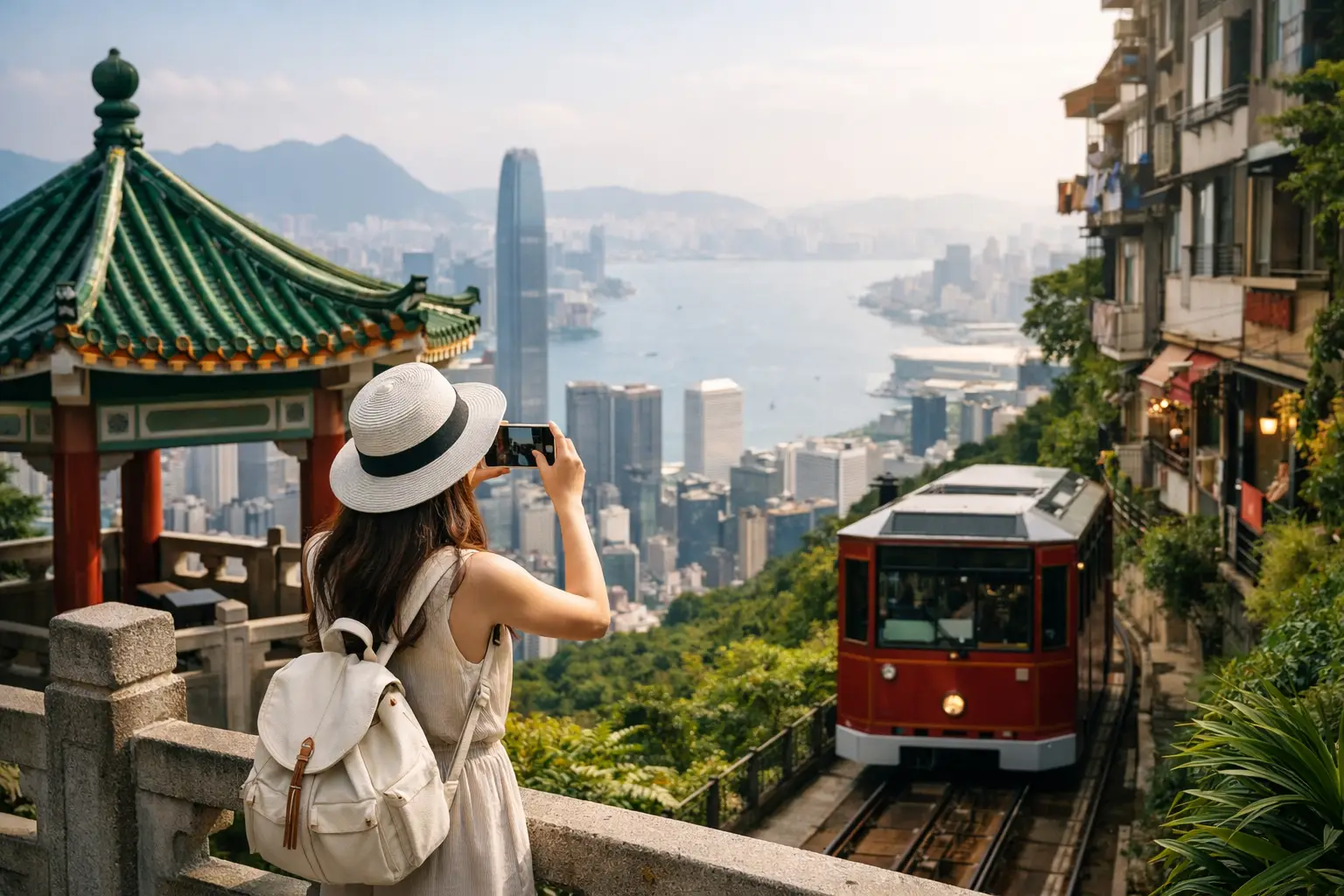
Weather also changes what counts as “aesthetic.” On clear days, elevated viewpoints, harbor promenades, and mountain-backed city shots carry the route. On humid or overcast days, markets, stair streets, trams, heritage blocks, and indoor-outdoor transitions often photograph better. The city still looks good, but the route should adjust instead of forcing skyline-heavy plans that depend on perfect visibility.
Route 1: Old Hong Kong with polished city contrast
This is one of the most reliable options for travelers who want variety without overcommitting. Start in Sheung Wan, where older shop signs, dried goods storefronts, narrow lanes, and muted building colors create a textured visual base. The appeal here is not one giant landmark. It is rhythm. Doorways, corner cafés, tiled facades, and side-street symmetry all work well if you like detail shots and street portraits.
From there, move into Central for a cleaner, more vertical feel. Glass towers, steep streets, heritage buildings, and mid-level walkways create a sharp contrast with Sheung Wan. This route works especially well for couples and solo travelers because the walking distances are manageable, but footwear matters. Some of the best angles come with hills and stairs, and that is enjoyable for some travelers and tiring for others.
Finish on the harbor side if you want your day to open rough and local, then close refined. This route is strong because it feels edited without looking staged. You get old Hong Kong texture, business-district geometry, and waterfront polish in one day.
Best for
Travelers who want a balanced mix of heritage, urban design, coffee stops, and easy outfit changes without spending the whole day in transit.
Route 2: Color, street life, and everyday character
If your photos lean bold rather than minimal, build the day around neighborhoods with more street-level energy. Sham Shui Po is often a better fit than polished luxury districts when you want authenticity, layered signage, market scenes, old apartment exteriors, and stronger local character. It is less controlled, which is exactly why it works.
This route is excellent for fashion, documentary-style reels, and food content. You can move between street snacks, fabric stalls, electronics pockets, and older residential blocks with very little dead time. The trade-off is that it is not always “pretty” in the conventional sense. It is busy, crowded, and visually dense. For some travelers, that creates the most compelling images. For others, it feels too hectic.
Pair it with a later stop in Mong Kok or Yau Ma Tei if you want neon-adjacent energy and fuller evening street scenes. This gives your route a natural build from daytime grit to nighttime glow. If you are traveling with children or older relatives, though, the crowd levels can wear people down. In that case, a private vehicle between districts can keep the route comfortable while still preserving the visual arc of the day.
Route 3: Harbor lines, skyline light, and clean compositions
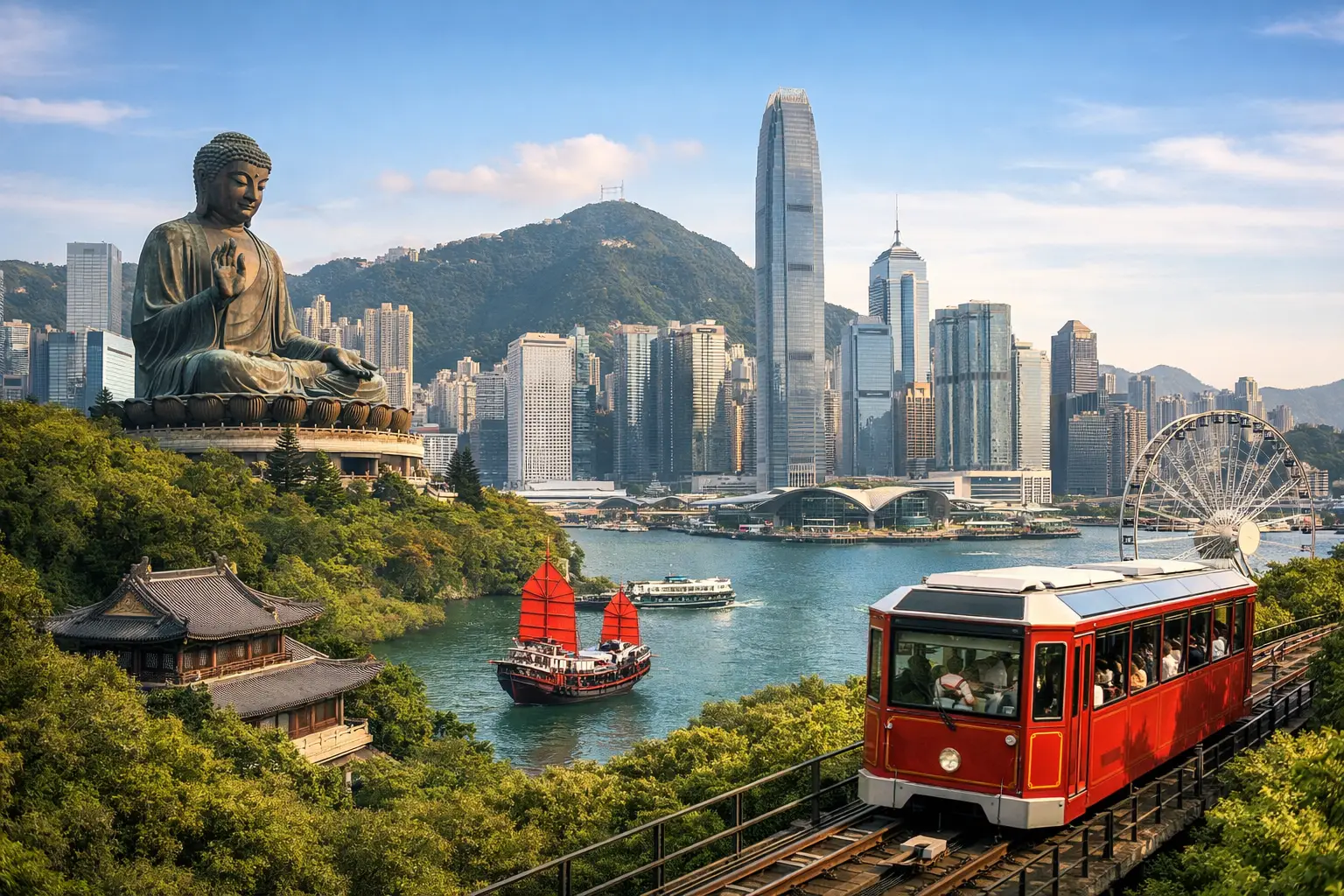
Some travelers are not looking for markets or dense street texture. They want elegant city views, open space, reflective surfaces, and that unmistakable Hong Kong skyline. For that, build around Tsim Sha Tsui and the harborfront.
This route is easier on the legs and usually more predictable for timing. Wide promenades, cultural venues, luxury retail facades, ferries, and water-facing skyline compositions make it one of the most accessible choices for families and visitors on a short schedule. It also works well if you need a polished set of photos without too much experimentation.
The trade-off is originality. Harbor images are iconic, but they are also the most commonly photographed. To make the route feel more personal, mix in quieter corners, tighter crop ideas, or one contrasting neighborhood before sunset. Otherwise, the whole day can start to look visually similar.
When this route makes the most sense
It is ideal for first-time visitors, cruise passengers with limited hours, and business travelers who want a premium look with minimal planning friction.
Route 4: Nature-meets-city for softer visuals
Hong Kong is not only towers and neon. Some of the most memorable routes combine coastal air, temple details, village textures, and mountain or sea backdrops. Lantau, quieter waterfront areas, and select outlying districts can create a softer, more spacious photo day that feels very different from the urban core.
This kind of route is useful when your group wants scenic variety but not constant intensity. It suits families, slower-paced travelers, and anyone building content around culture, landscape, or lifestyle rather than only city shots. The main thing to watch is travel time. Scenic routes can look relaxed on paper but eat up hours if you piece them together inefficiently.
That is where curated transport makes a real difference. When the route includes viewpoints, villages, beaches, or cultural stops, private transfers remove a lot of downtime between one photogenic area and the next. MyHKTour often serves travelers who want exactly that combination – visual planning plus practical, door-to-door comfort.
What makes a route better than a list of photo spots
A strong route accounts for transitions. Your outfit, your energy, the weather, meal timing, restroom access, and sunset position all affect whether the day feels smooth or frustrating. This is especially true if your group includes children, parents, or friends with different priorities. One person may want café content, another wants skyline shots, and someone else just wants not to get lost.
That is why private, customized planning often delivers better results than copying a social media checklist. A route can be adjusted around your pace, whether you want 3 major stops with time to enjoy each one or 7 lighter stops that create more visual variety. Neither is automatically better. It depends on whether your trip is content-first, comfort-first, or trying to balance both.
Practical timing for aesthetic routes in Hong Kong
The sweet spot is usually one of two approaches. Start early and finish by late afternoon if you want calmer streets, softer daylight, and a less rushed experience. Or start midafternoon and continue into evening if your priority is city lights, reflections, and moodier street scenes.
Trying to do both in one day is possible, but it can be tiring. You may end up carrying extra layers, waiting through midday heat, and losing momentum before the best evening light arrives. For many travelers, two shorter themed routes work better than one oversized photo marathon.
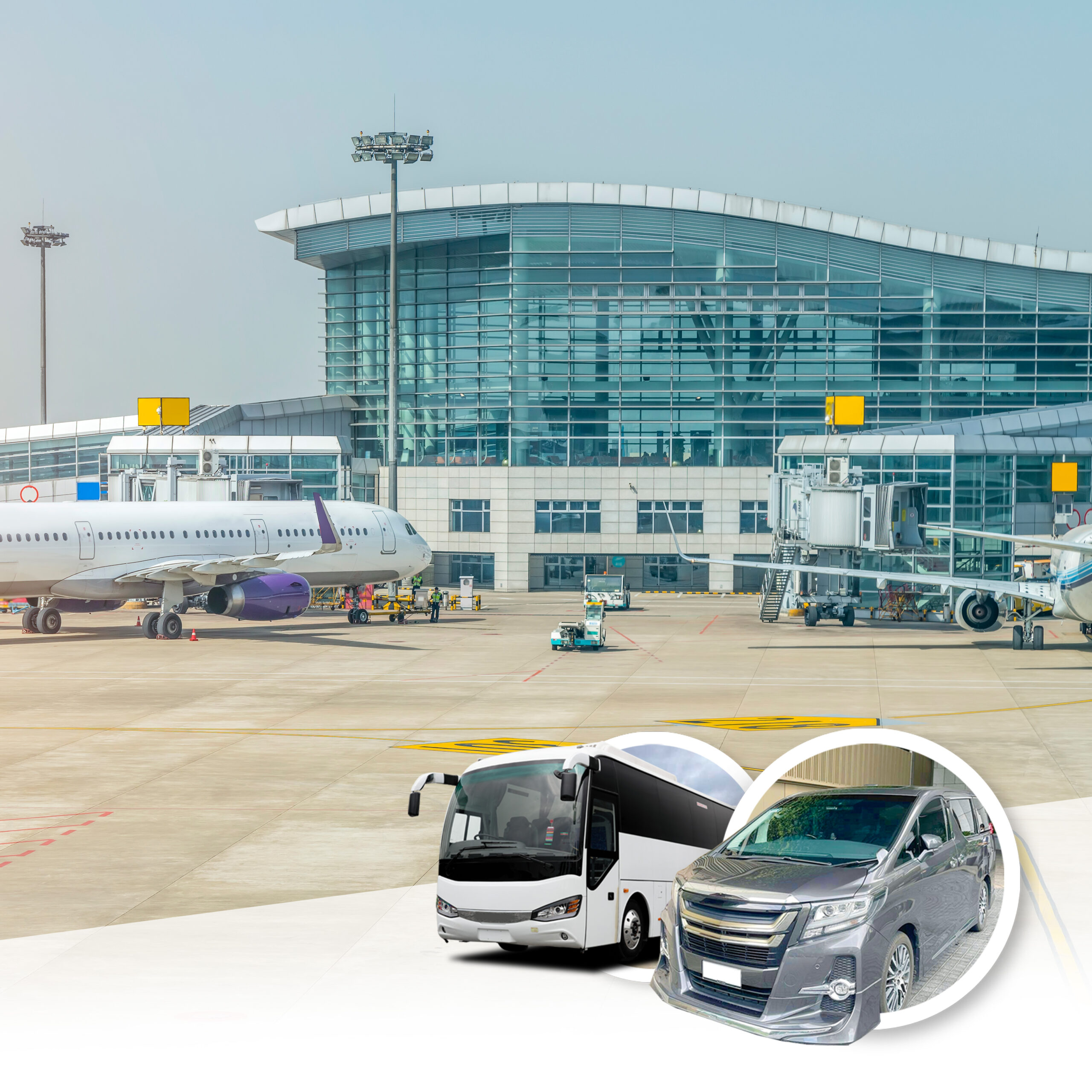
Transportation choices matter here more than people expect. Public transit is excellent, but excellent does not always mean ideal for a photo-focused itinerary. Station transfers, platform distances, and wrong exits can eat into the exact windows when locations look best. For groups, families, and premium travelers, a private route often saves more than just time. It preserves the mood of the day.
Choosing the right route for your travel style
If you want Hong Kong to look editorial and relaxed, stay concentrated and choose districts with strong visual contrast. If you want energy and local texture, accept a little chaos and build around older neighborhoods. If comfort is your top priority, shape the route around easy transfers and fewer stops. And if this is part of a wider trip through Macau or other nearby cities, keep your Hong Kong day visually focused rather than trying to do everything at once.
The best photos usually come from a day that felt manageable while you were living it. Plan for the light, leave space between stops, and let the city give you more than one version of itself.