A 9:00 a.m. meeting in Shenzhen can become a very long day when a team is still sorting out pickup points, border procedures, luggage, and the right address at 8:15. Shenzhen business transport is not simply about getting a vehicle. It is about protecting the time, comfort, and focus your team needs between Hong Kong, Shenzhen, and the appointments that matter.
For executives, client groups, exhibitors, and visiting partners, private transport creates a more controlled way to travel. The right arrangement can collect guests from a hotel, airport, office, or cruise terminal, coordinate a suitable cross-border route, and keep the group together through a schedule that may change during the day.
What Business Travel in Shenzhen Usually Requires
Shenzhen is a major commercial center with meetings spread across districts such as Futian, Nanshan, Luohu, and Bao’an. A day may include a supplier visit in the morning, lunch with partners in another district, and an evening return to Hong Kong. Public transportation can be efficient for independent travelers with time to spare, but it is not always the best fit for a business schedule involving guests, equipment, or multiple stops.
A private business transport plan gives the itinerary a single point of coordination. Rather than asking each person to find the next station, book a separate ride, or manage local payment methods, the group travels together in a vehicle selected for its size and purpose. That can be especially useful for first-time visitors who want to arrive prepared rather than tired from working out the logistics.
Cross-border travel also needs advance attention. Passenger documentation, visa or entry requirements, border operating conditions, vehicle permissions, and luggage arrangements can affect the route and timing. Requirements vary by nationality and travel status, so travelers should verify their own eligibility well before departure. A knowledgeable transport provider can help structure the day around the practical realities of the crossing, but personal travel documents remain each guest’s responsibility.
Choosing the Right Shenzhen Business Transport Service
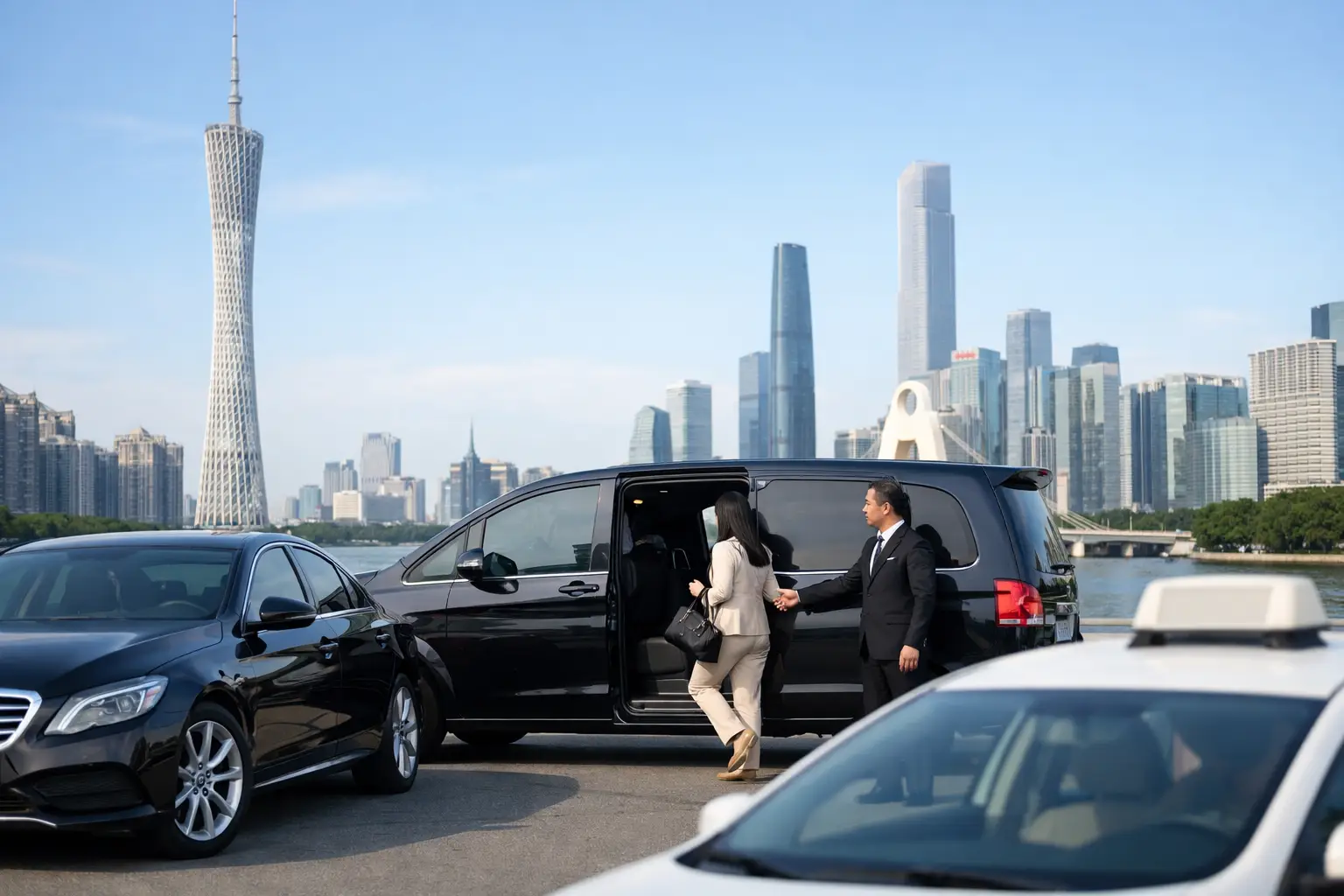
The best vehicle is rarely the largest one available. It should match the number of passengers, the amount of luggage, the length of the day, and the impression you need to make. A sedan may suit one or two executives traveling light. A luxury van often works well for a small delegation, allowing colleagues to talk comfortably on the road. For conference groups, factory visits, and company events, a minibus or coach keeps larger parties organized.
Capacity matters, but so does usable space. A vehicle that technically seats six may not be comfortable for six adults carrying cabin bags, presentation materials, or trade-show equipment. When requesting a quote, share the passenger count, number of suitcases, pickup and drop-off points, and any bulky items. Clear information at the planning stage prevents last-minute compromises.
Private Point-to-Point Transfers
A point-to-point transfer is ideal when the schedule is straightforward: airport to Shenzhen hotel, Hong Kong office to a Shenzhen meeting, or Shenzhen venue back to Hong Kong after an event. It gives travelers a direct, private journey without building a full charter around the day.
This option is a practical choice for airport arrivals and formal appointments with a fixed end time. It can also be the more cost-conscious option when there is only one main movement and no need for the driver to wait between meetings.
Hourly Charters for Changing Schedules
An hourly charter gives a team more flexibility when the day involves several meetings or uncertain finishing times. The vehicle and driver remain available according to the agreed service period, allowing the itinerary to adapt if a presentation runs over, a client suggests a nearby lunch, or the group needs an additional stop.
The trade-off is cost. An hourly charter may cost more than a direct transfer, but it can be better value than arranging several separate rides, particularly for groups. It also reduces the pressure of having to predict every movement in a business day before it begins.
Coach and Bus Charters for Larger Groups
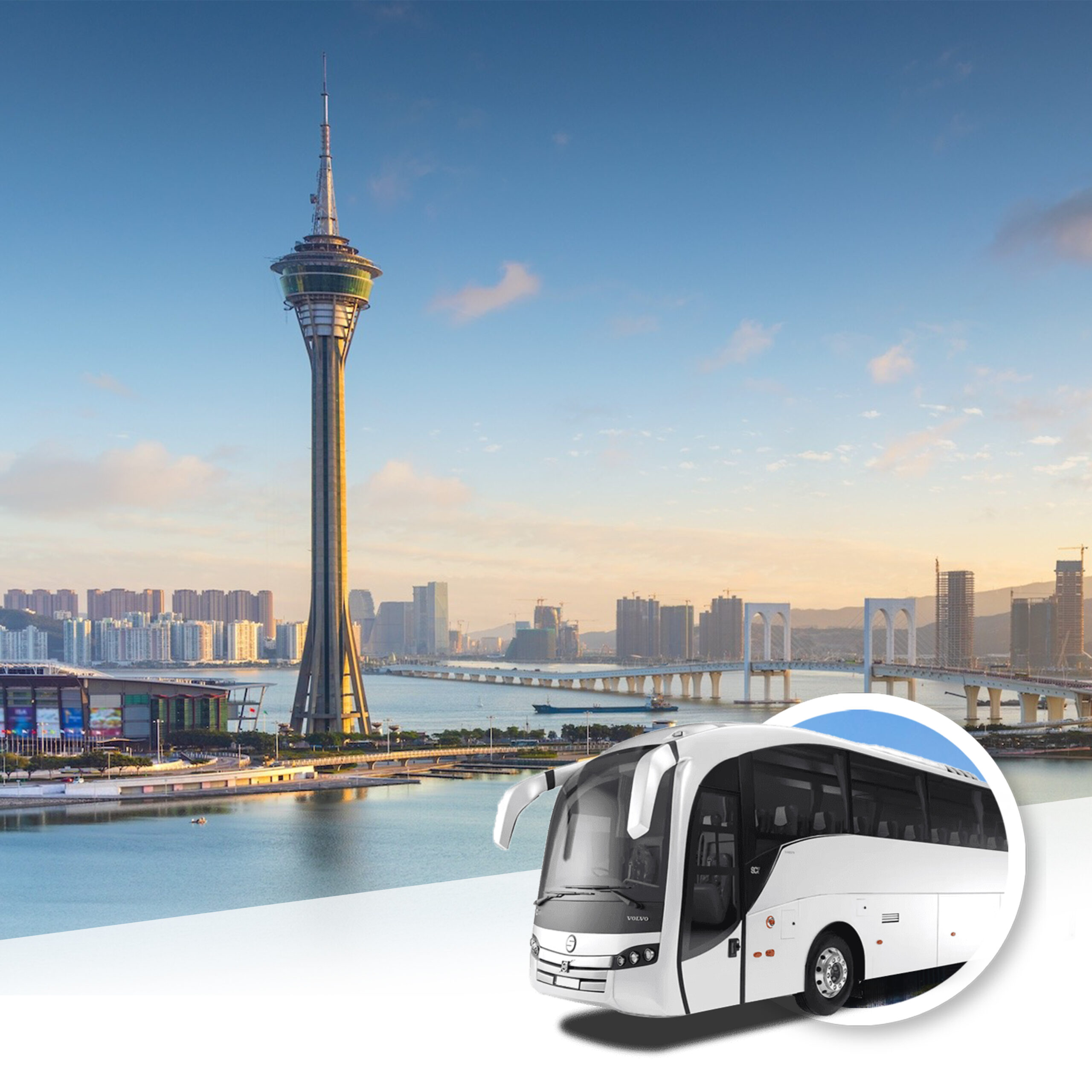
For company delegations, incentive groups, exhibition teams, and groups of more than 40 travelers, a bus charter keeps logistics manageable. It gives organizers one arrival time, one departure point, and a consistent standard of transport for the whole party.
Large-group planning should begin early. Hotels need a suitable loading area, venues may have specific bus access rules, and border timing becomes more significant when many passengers need to move together. A well-planned coach itinerary should include realistic buffers instead of assuming the group will move at the pace of a single traveler.
Build Time Buffers Into the Itinerary
The most common mistake in cross-border corporate travel is planning the day around ideal travel times. Traffic, border queues, weather, and meeting overruns are not always predictable. A schedule that leaves no room for them can create unnecessary stress for both guests and hosts.
For an important meeting, plan to arrive early enough for registration, security, coffee, and a brief reset before the appointment. If the agenda includes more than one district, group stops geographically where possible. A Futian meeting followed by an Nanshan visit may be workable, but adding a return trip across the city for a short lunch can consume more time than expected.
It also helps to decide what is fixed and what is flexible. The client presentation may be non-negotiable, while a shopping stop or sightseeing detour can be removed if the day runs late. This simple distinction gives the driver and organizer a clearer way to make decisions on the road.
Make the Journey Work for International Guests
Business transport is part of the guest experience. Visitors arriving from the United States or other international markets may be dealing with jet lag, unfamiliar mobile connectivity, different payment systems, and uncertainty about local navigation. A private pickup with clear meeting instructions removes several points of friction at once.
For senior guests, consider a vehicle with room to relax and a schedule that avoids unnecessary transfers. For teams, use the travel time well: confirm the meeting agenda, review presentation roles, or simply give people a quiet break before the next engagement. The value is not only speed. It is the ability to arrive composed.
Language support can be equally valuable. A driver or local coordinator who understands the itinerary can help confirm the correct entrance, communicate with venues, and handle practical adjustments. This is particularly helpful for factory visits and industrial parks, where a street address alone may not identify the right gate or reception area.
Combine Meetings With a Better Regional Visit
A Shenzhen work trip does not have to be limited to hotel lobbies and conference rooms. If the schedule allows, adding a short meal, a cultural stop, or a carefully chosen local experience can make a client visit more memorable without turning it into an overpacked tour.
The key is restraint. A group with a full meeting agenda may only need a well-timed dinner and a comfortable return journey. A team extending its stay by a day may have time for a more tailored itinerary in Shenzhen, Hong Kong, Macau, Zhuhai, or Guangzhou. MyHKTour can arrange private transport alongside customized sightseeing, allowing business travelers to keep the same reliable planning contact when work gives way to discovery.
Details to Confirm Before You Book
Before confirming service, provide the travel date, flight or cruise details if relevant, every pickup and drop-off location, passenger and luggage numbers, and the expected itinerary. Mention whether the group has elderly travelers, children, mobility needs, equipment cases, or a tight event deadline.
Ask how waiting time, overtime, parking, tolls, cross-border arrangements, and late-night service are handled. These details should be clear before travel, not discovered after a long day of meetings. If your itinerary includes a border crossing, confirm the expected procedure and allow enough time for each passenger to complete it.
A well-organized vehicle plan does more than move people between addresses. It gives your team room to prepare, your guests confidence in the schedule, and your host the freedom to focus on the conversation waiting at the next stop.